


Why Your CTR Model Is Betraying You

Sille Christensen
June 2, 2026
A static CTR model relies on fixed averages. AccuRanker's dynamic CTR model accounts for 120+ factors to calculate a keyword's expected CTR.
You finally rank #1 for a keyword you have been targeting for months. The traffic starts rolling in… right? Well, not necessarily.
Today’s SERPs are crowded with AI Overviews, featured snippets, and dozens of SERP features that compete for clicks. So even if you win the ranking battle, you might still lose the click. That is why relying on traditional CTR models can lead you astray. Let us dig into the difference between traditional, static CTR models and our AI CTR model.

Why the Static CTR Lies to You
A static CTR model assumes a fixed percentage for each keyword, based on its rank. The model presents a CTR of 31.2% for rank 1, suggesting you will get about one-third of the clicks if you land the top spot on the SERP. If you land the second spot, the model assumes a CTR of 12.6%.
But the static CTR model assumes that every SERP looks the same. This is far from the truth. Dynamic elements like ads, featured snippets, AI Overviews, and other SERP features take up space on the SERP. Thus, your top-ranking organic result might not even be visible above the fold, let alone get 30% of the clicks.
But how does this model betray you in your SEO work? Below are three consequences of using the static CTR model.
1. You chase traffic that never arrives
A keyword looks like a goldmine. It has high search volume and an estimated CTR that promises thousands of clicks. You put all your effort into winning that keyword, and then reality hits. SERP features soak up the clicks before users ever reach the organic listings.
If your CTR ignores SERP features like featured snippets, AI Overview, and ads, you might assume that ranking number 1 guarantees a lot of traffic. This misleads your keyword optimizations, causing you to spend time on keywords that do not generate the traffic you would expect.
2. You misread your SEO performance
Imagine you are ranking in the top 3, but your CTR is lower than expected. A static CTR model would suggest that something is wrong with your content. Naturally, you start tweaking titles, optimizing the text, and rewriting meta descriptions. But the issue may have nothing to do with your content.
Depending on the SERP layout, the organic results move up and down the SERP. This changes the results’ pixel positions, which can cause a lower CTR despite a top ranking. Therefore, you might think a page performs better or worse than it actually does, causing you to misread your SEO performance.
3. You promise results you cannot deliver
Forecasting is an important part of SEO. Your stakeholders want to know how much traffic and revenue a rank improvement can generate. But static CTR models sometimes paint an overly optimistic picture with inflated CTRs that look good on paper.
Therefore, if you rely on CTRs that assume users click search results the same way they did years ago, you overpromise results to stakeholders. And when your forecasts look great in presentations, but you fail to deliver those results, your SEO strategy and credibility take a hit, even though the problem was the CTRs, not your execution.
Your SEO decisions are only as strong as the data behind them. If your CTR model is stuck in the past, so is your strategy. Now, you might think, “What is my alternative?” We have a solution that gives you CTRs you can really trust.
AccuRanker’s Solution to Inaccurate CTRs
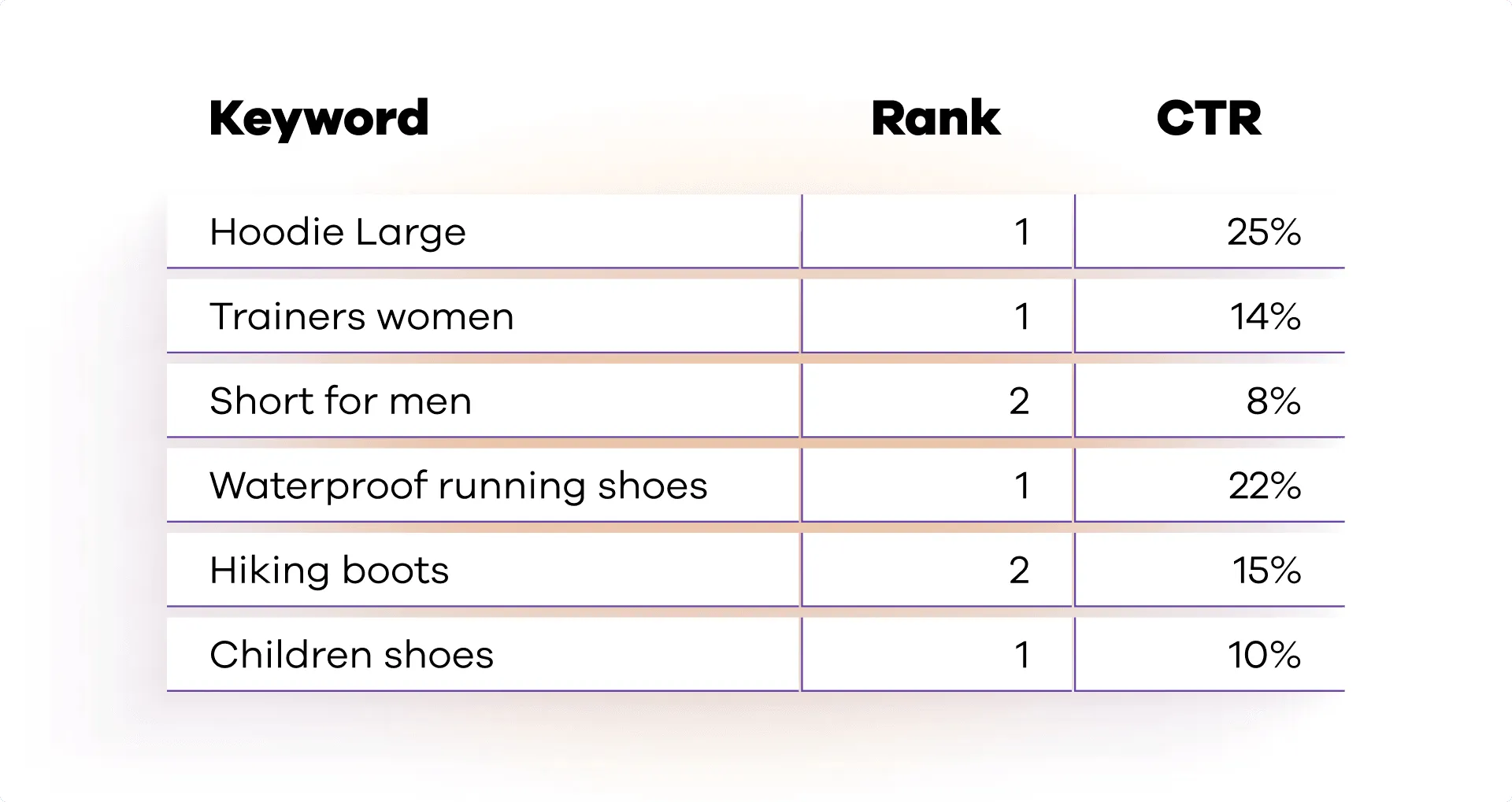
Let us get this settled: a CTR is far from static, and neither are today’s SERPs. A rank 1 does not guarantee a fixed share of clicks. In fact, the CTR for rank 1 can vary from 0% to 75% because the SERP layout can push organic search results up and down the page (Factors affecting Click-Through Rate in Organic Search, AccuRanker, 2025).
That is exactly why we developed a dynamic CTR model that accounts for more than 120 parameters to calculate a keyword’s expected CTR. These parameters include SERP features, pixel position, and search intent.
Instead of relying on fixed averages, our model estimates how much traffic a keyword will realistically generate based on the current SERP. But why is the SERP layout so crucial to consider in the CTR metric? Because it changes all the time, which impacts what users see and click.
To understand what truly affects CTR in organic search, we analyzed how 120+ factors influenced CTR across 1.3 billion SERPs. Here are three key findings:
- Pages with AI Overviews get around 50% less traffic on mobile than those without.
- Featured snippets have an average CTR of 12%.
- Navigational queries have a rank 1 CTR of more than 40%.
These numbers are no joke — they tell you exactly how modern SERPs affect click behavior. If you want the full breakdown, download our CTR study and get all the insights you need.
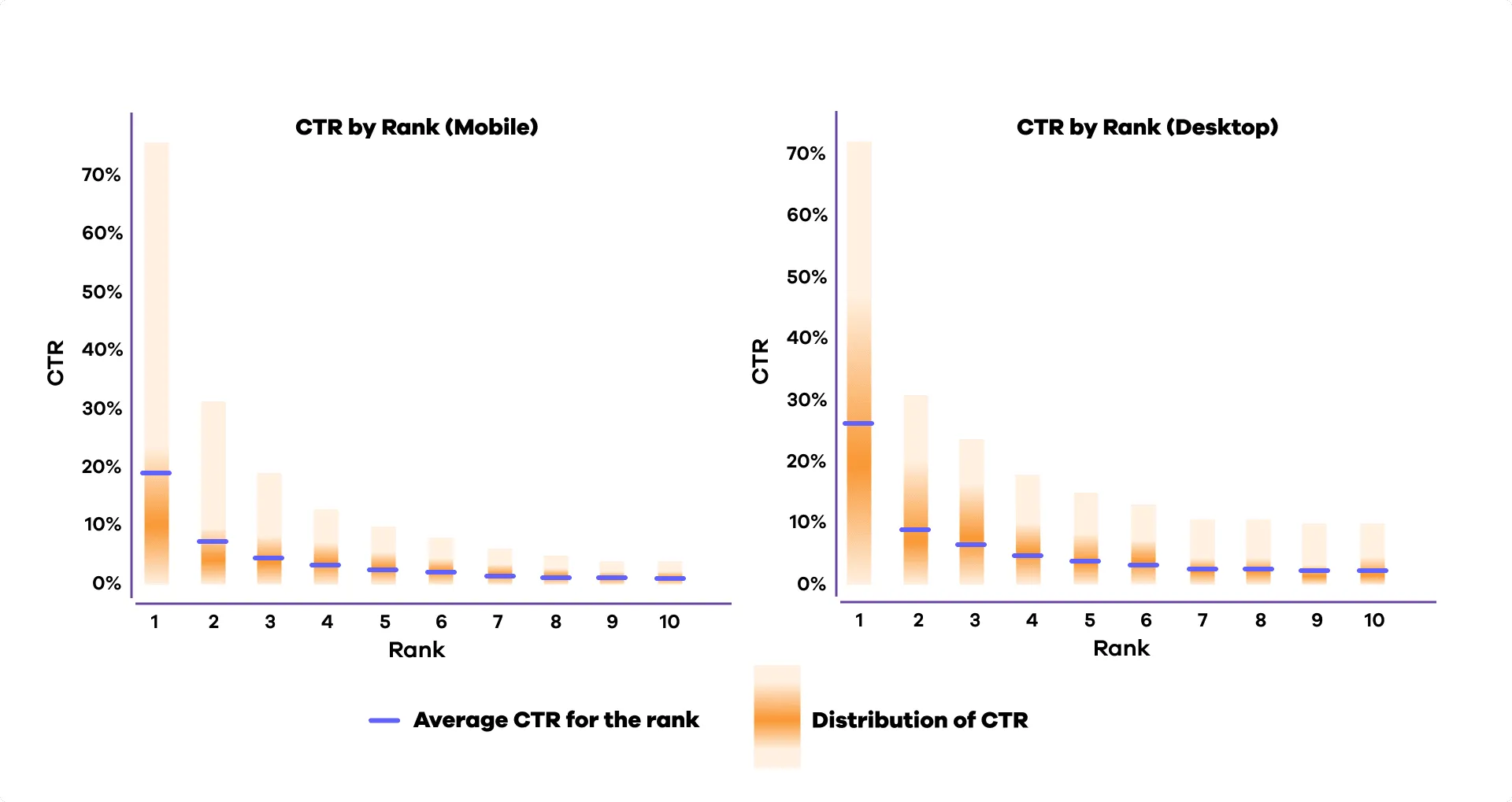
Let us illustrate how our accurate CTRs make your job much easier.
How the Dynamic CTR Helps You
You cannot measure click potential with a model built for a SERP that no longer exists. But with our dynamic CTR, you get the true click potential for every keyword. It gives you a better and more accurate CTR, which enables you to:
- Spot high-potential keywords to target in new content
- Identify pages to optimize for increased traffic
- Accurately forecast the business impact of your SEO efforts.
The model allows you to make decisions rooted in how users actually behave on modern SERPs. You get CTRs that reflect the dynamic SERP layout and what users see when searching for a keyword, helping you focus on keywords that drive results.
While your competitors rely on a static CTR model built for yesterday’s SERPs, you gain insights that reflect today’s SERPs. And when you understand where the clicks are really going, you are one step ahead in the race for clicks.
Today’s SERPs Need CTRs that Adapt
Every SEO decision starts with understanding potential. You need to understand how users interact with the SERP and where the clicks actually go. And when you know how many clicks a rank can realistically generate, you can prioritize better, forecast more accurately, and focus your efforts where they will have the biggest impact. That is exactly what our AI CTR delivers.
Request a demo and see how we help you understand the true potential of your keywords.
Related blog posts

How AccuRanker’s AI Models Fix Inaccurate SEO Data
Struggling with unreliable SEO data? Discover how AccuRanker’s CTR, Search Intent, Search Volume, and Share of Voice deliver accurate insights.
1 June 2025
The Hidden Flaws in Search Volumes and How to Solve Them
Learn how AI Search Volume delivers reliable search volumes by combining GKP, GSC, and Trends so that you can prioritize the right keywords.
30 March 2026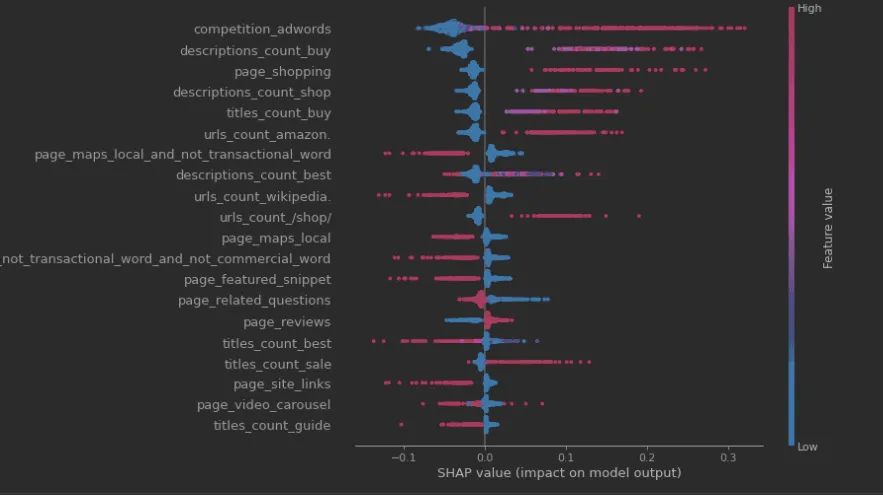
How AccuRanker Determines Search Intent With AI
Learn how AccuRanker determines search intent with AI and what SERP features determine search intent.
10 December 2024